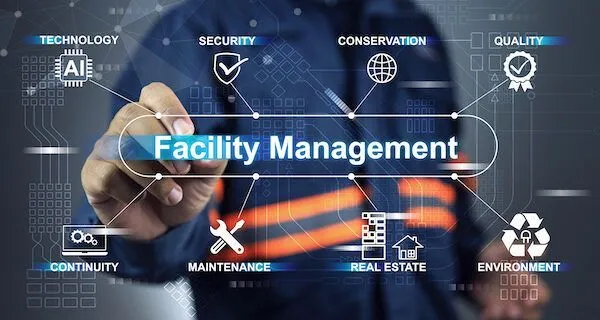
Facilities management companies play a critical role in improving operational efficiency by managing buildings, assets, and infrastructure in a structured and efficient way. The demand for facilities management companies in Kuwait is rapidly increasing due to large infrastructure projects and growing operational complexity. Businesses are actively searching for top facilities management companies that can deliver smart, technology-driven solutions. Smart Management Solutions (IMS) provides advanced digital facility management systems that enhance operational performance and reduce costs.
This article provides a detailed overview of facilities management companies, including their core services, key evaluation criteria for selecting the best providers, and their role in improving operational efficiency across modern organizations.
What Is a Facilities Management Company?
A facilities management company is a specialized service provider responsible for the overall management, operation, maintenance, and optimization of buildings, infrastructure, and physical assets within an organization. The main goal is to ensure that facilities operate efficiently, safely, and sustainably while supporting the core business activities of the organization. These companies act as a bridge between physical assets and operational performance by ensuring that every system inside a building works in harmony, from HVAC systems to security and energy management.
Core Services Provided by Facilities Management Companies
Building Maintenance
Building maintenance refers to all activities required to keep a facility in optimal physical condition. This includes routine inspections of building structures, repair of walls, ceilings, floors, and plumbing systems, electrical system maintenance, fixing leaks, damages, and wear-and-tear issues, and ensuring compliance with safety standards. The goal is to extend the lifespan of the building, prevent costly repairs, and maintain a safe and functional environment for occupants.
Energy Management
Energy management focuses on monitoring, controlling, and optimizing energy consumption within facilities. Key activities include monitoring electricity and water usage, identifying energy waste areas, implementing energy-saving strategies, using smart meters and analytics, and improving energy efficiency systems. This service helps organizations reduce operational costs and supports environmental sustainability goals.
HVAC Systems
HVAC stands for Heating, Ventilation, and Air Conditioning systems. Facilities management companies are responsible for installing and maintaining HVAC systems, ensuring proper air quality and ventilation, controlling temperature and humidity levels, performing preventive maintenance on cooling systems, and reducing energy consumption of HVAC equipment. Proper HVAC management ensures comfort, health, and productivity inside buildings.
Security and Safety
Security and safety services ensure the protection of people, assets, and facilities. This includes CCTV monitoring systems, access control systems, fire alarm and firefighting systems, emergency response planning, and safety inspections and compliance checks. The objective is to minimize risks and ensure a secure working environment.
Cleaning Operations
Cleaning operations are essential to maintain hygiene, appearance, and health standards within facilities. Services include daily cleaning of offices and common areas, deep cleaning of facilities, waste management, sanitization and disinfection, and restroom and hygiene maintenance. Clean environments improve employee well-being and create a positive impression for visitors.
Asset Management
Asset management involves tracking, maintaining, and optimizing all physical assets within a facility. This includes equipment tracking and inventory control, asset lifecycle management, maintenance scheduling for equipment, cost optimization of asset usage, and replacement planning. The goal is to maximize asset value and reduce unnecessary operational costs.
Preventive Maintenance
Preventive maintenance refers to scheduled maintenance activities performed to avoid unexpected breakdowns. It includes regular inspections of equipment, scheduled servicing and repairs, early detection of potential failures, maintenance planning based on usage data, and reducing emergency repair costs. This approach improves reliability and reduces downtime.
Smart Systems Integration
Smart systems integration involves connecting all facility systems into a centralized digital platform. This includes integration of IoT sensors, CAFM (Computer-Aided Facility Management) systems, real-time monitoring dashboards, automated maintenance alerts, and data-driven decision making. This service enables organizations to transition from traditional facility management to smart, technology-driven operations.
It is important to note that these are not all the services offered by facilities management companies, as many additional customized solutions are available depending on each organization’s needs.
Therefore, you can request any facilities management service or advanced solution from Smart Management Solutions (IMS), which provides integrated solutions designed to improve operational efficiency, reduce costs, and support digital transformation.
Top Facilities Management Companies – Evaluation Criteria Explained
When evaluating top facilities management companies, organizations rely on several key performance criteria to determine the quality, efficiency, and reliability of service providers. These standards help businesses select the right partner to manage their facilities effectively and ensure smooth operational performance.
1. Experience
Experience is one of the most important factors when evaluating facilities management companies, as it reflects the company’s ability to handle different types of buildings and operational challenges. It includes years of experience in the facilities management industry, variety of managed projects, ability to handle large-scale and complex facilities, and proven track record and successful case studies.
2. Service Quality
Service quality reflects how well a facilities management company delivers its services according to agreed standards and client expectations. It includes accuracy and consistency in service delivery, compliance with operational standards, quality of maintenance, cleaning, and support services, professionalism of staff, and continuous improvement in service performance.
3. Technology Used
Technology plays a critical role in modern facilities management. It includes CAFM systems, IoT-based monitoring and sensors, asset tracking systems, smart dashboards and reporting tools, and AI-powered analytics for predictive insights. Using advanced technology improves efficiency and enables real-time monitoring and decision-making.
4. Responsiveness
Responsiveness refers to how quickly a company reacts to service requests, emergencies, and maintenance issues. It includes fast response to requests, quick resolution of technical issues, 24/7 support teams, and adherence to service-level agreements (SLAs).
5. Energy Management
Energy management focuses on monitoring electricity and water consumption, optimizing HVAC and lighting systems, reducing energy waste, and using smart systems for automation and control. It supports both cost reduction and sustainability goals.
6. Customer Satisfaction
Customer satisfaction is measured through client feedback, communication quality, speed of problem resolution, service reliability, and overall user experience within facilities.
Selecting top facilities management companies depends on experience, service quality, technology adoption, responsiveness, energy management, and customer satisfaction.
What Are the Top 5 Facilities Management Companies?
There is no fixed global ranking that definitively identifies the top 5 facilities management companies. However, companies in this sector are generally evaluated based on their technology adoption, operational efficiency, and service quality.
Evaluation Criteria Typically Used Include:
CAFM integration
The use of Computer-Aided Facility Management systems to centralize and streamline facility operations, asset tracking, and maintenance processes.
Internet of Things (IoT)
Implementation of smart sensors and connected devices to enable real-time monitoring, predictive maintenance, and improved building performance.
Digital transformation
Adoption of digital tools and smart technologies to improve decision-making, automate processes, and enhance operational transparency.
Integrated solutions
Providing end-to-end facility management services that cover maintenance, operations, energy, security, and asset management in a unified system.
Operational efficiency improvement
Focus on optimizing resources, reducing downtime, lowering operational costs, and enhancing overall service quality.
In general, the most effective facilities management companies are those that combine advanced technology with strong operational capabilities to deliver efficient, scalable, and sustainable solutions tailored to client needs.
What Are the Major Companies in Kuwait?
Kuwait is home to many major companies and large organizations operating across key economic sectors. These entities play an important role in supporting the national economy and developing infrastructure and various essential services.
Key Sectors in Kuwait:
Oil and Gas Sector
This is considered the most important sector in the Kuwaiti economy. It includes production, refining, and oil service companies that support the country’s energy operations.Banking and Financial Sector
This sector includes a group of banks and financial institutions that provide financing, investment, and banking services for individuals and businesses.Real Estate and Urban Development Sector
It includes real estate development companies responsible for residential and commercial projects, as well as large-scale urban developments and complexes.Transportation and Logistics Sector
This sector supports trade, import, and export activities through maritime and land transportation companies, as well as logistics service providers.Government Infrastructure Sector
It includes major government-led projects related to roads, public utilities, and strategic development initiatives.
These sectors are considered fundamental pillars of the Kuwaiti economy, as major companies within them rely on advanced operational and management systems to ensure efficiency and sustainable performance.
Importance of Facilities Management in Kuwait
Supporting rapid urban development:
Facilities management plays a key role in keeping up with Kuwait’s rapid urban expansion by efficiently operating and maintaining modern buildings and large-scale developments, ensuring sustainable infrastructure growth alongside increasing projects.Improving building and facility operational efficiency:
It enhances the performance of essential building systems such as HVAC, electrical, security, and cleaning services, resulting in smoother, more stable, and efficient day-to-day operations.Organizing maintenance and operational processes:
Facilities management relies on scheduled and preventive maintenance plans that reduce unexpected breakdowns and ensure continuous operation of critical building systems without interruption.Efficient asset and infrastructure management:
It helps track and manage physical assets and equipment systematically, extending their lifecycle and reducing costs associated with replacements and unplanned maintenance.Reducing operational costs:
By optimizing energy consumption and resource usage and minimizing waste, facilities management significantly lowers overall operational expenses in the long term.Minimizing unexpected breakdowns:
Through monitoring systems and preventive maintenance strategies, potential issues are detected early, reducing downtime and ensuring continuous operations.Enhancing business continuity and performance quality:
It provides a stable and safe operational environment that allows organizations to function efficiently without disruption, improving service quality and user satisfaction.
In conclusion, facilities management companies are a fundamental pillar in enhancing operational efficiency, ensuring asset reliability, and supporting sustainable business growth. As demand continues to rise, organizations are increasingly adopting technology-driven solutions.
Request one of IMS facilities management services to transform your facility management into a smart, data-driven system that enhances efficiency and sustainability.

-webp.webp)