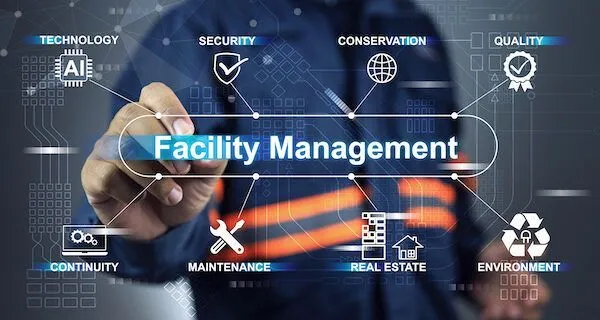
Facility management in the government sector is a fundamental function that ensures public buildings, infrastructure, and essential services operate efficiently, safely, and sustainably. Government institutions manage a wide range of facilities that serve citizens daily, including administrative buildings, hospitals, schools, transport networks, and public utilities.
With rising public expectations and tighter budget control, governments are adopting modern, technology-driven facility management systems to improve efficiency, reduce operational costs, and enhance service delivery.
What is Facility Management in the Government Sector?
Facility management in the government sector refers to the coordination, operation, and maintenance of public assets and infrastructure within government institutions. It ensures that buildings and services remain functional, safe, cost-effective, and compliant with public service standards.
This includes managing maintenance operations, energy consumption, cleaning services, security, and the lifecycle management of assets across all government facilities.
What is a Facilities Manager in the Government Sector?
A Facilities Manager (FM) in the government sector is responsible for overseeing the operation and maintenance of public facilities. Their duties include:
Planning and supervising maintenance activities
Managing the performance of public assets and infrastructure
Ensuring compliance with safety standards and regulations
Coordinating with service providers and contractors
Improving operational efficiency and resource utilization
What Facilities Does the Government Provide?
Healthcare facilities such as hospitals and clinics
Educational institutions such as schools and universities
Public safety facilities such as police and fire stations
Transportation infrastructure including roads, airports, and stations
Government administrative buildings
Municipal services such as parks and public spaces
Utility services such as water, electricity, and waste management
The Importance of Government Facility Management
Higher efficiency in public service operations
Reduced maintenance and operational costs
Improved safety and compliance across all facilities
Better utilization of public assets
Increased citizen satisfaction and trust
Long-term sustainability of public infrastructure
The Role of Technology in Government Facility Management
Centralized maintenance management across all facilities
Automated work order processing and task assignment
Real-time monitoring of assets and infrastructure
Preventive maintenance scheduling to avoid failures
Data analytics to improve decision-making processes
You can request one of the integrated facility management services and smart solutions by filling out the request form.
Benefits of Digital Transformation
1. Improved Operational Efficiency
Digital transformation significantly enhances the efficiency of government operations by reducing reliance on manual processes and paperwork.
2. Centralized Asset Management
Governments can centralize all asset data into a single platform for better monitoring and control.
3. Cost Reduction and Financial Efficiency
Preventive maintenance helps reduce repair costs and improve budget control.
4. Improved Public Service Delivery
Faster response times improve service quality and citizen satisfaction.
5. Enhanced Transparency and Accountability
All operations are documented and traceable, improving governance.
6. Improved Data-Driven Decision Making
Real-time analytics help improve planning and resource allocation.
7. Enhanced Safety and Compliance
Automated systems ensure adherence to safety standards and regulations.
Challenges in Government Facility Management
Large-scale and aging infrastructure
Limited budgets and financial constraints
Fragmented management systems
Coordination between multiple departments
Heavy reliance on manual processes
Why Governments Should Adopt Smart Systems
Smart facility management platforms help governments improve efficiency, reduce waste, and enhance service delivery. Adopting digital systems is essential for operational excellence and sustainability.
Government facility management is a strategic pillar for ensuring efficient public services and sustainable infrastructure. Investing in smart systems enables better performance, lower costs, and improved citizen satisfaction.

-webp.webp)