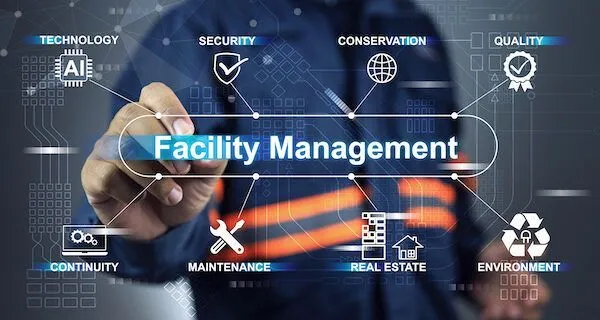
Facilities management plays a vital role in ensuring that buildings, infrastructure, and workplaces operate efficiently, safely, and productively. For decision-makers wondering about the concept of facilities management, it refers to the strategic coordination of people, processes, technology, and physical assets to maintain and improve facility performance. In modern organizations, facilities management services are typically divided into two main categories: Hard FM and Soft FM.
Understanding the difference between hard and soft facilities management helps organizations develop an effective FM strategy that balances technical maintenance with workplace experience. While Hard FM services focus on the physical infrastructure of buildings such as mechanical, electrical, and structural systems, Soft FM services support the people who use the facilities through services such as cleaning, security, and hospitality. Both types of services are essential for providing a safe, efficient, and comfortable environment across commercial buildings, hospitals, educational institutions, retail centers, and industrial facilities.
Soft Facilities Management (Soft FM)
Soft Facilities Management refers to services that support daily workplace operations and enhance the experience, comfort, and safety of occupants.
Unlike technical infrastructure services, soft services are primarily people-focused and operational in nature. They ensure that facilities remain clean, organized, safe, and welcoming. Soft FM services are essential in environments where employee productivity, visitor satisfaction, and workplace well-being are priorities.
Key Characteristics of Soft FM
Soft FM services typically:
Focus on occupant comfort and support
Improve workplace experience
Enhance building appearance and cleanliness
Support health and safety standards
Improve operational efficiency
Organizations that invest in strong Soft FM services often experience higher employee satisfaction and an improved brand image.
Types of Soft FM Services
Common soft services include:
Cleaning and general hygiene services
Waste management and recycling
Security and access control services
Landscaping and grounds maintenance
Reception and visitor management
Catering and hospitality services
Pest control services
Mailroom and logistics support
These services play a major role in daily operations and workplace functionality.
Hard Facilities Management (Hard FM)
Hard Facilities Management focuses on the technical infrastructure and physical assets of a building. These services are essential to ensure that critical systems operate safely and efficiently.
Hard FM services are usually mandatory and compliance-driven because they involve systems that directly affect building safety, structural integrity, and operational reliability. In practical terms, Hard FM represents the engineering and maintenance backbone that keeps buildings operational.
Key Characteristics of Hard FM
Hard FM services generally:
Involve technical building systems
Require engineering expertise
Ensure safety and regulatory compliance
Support asset lifecycle management
Prevent system failures and downtime
Without effective Hard FM services, buildings may experience system failures, safety risks, and costly operational disruptions.
Types of Hard FM Services
Hard FM typically includes:
Mechanical and Electrical Maintenance
Electrical networks
Lighting systems
Power distribution systems
Backup generators
HVAC Systems Maintenance
HVAC maintenance
Air quality monitoring
Ventilation system maintenance
Cooling units and cooling towers maintenance
Plumbing and Water Systems
Pipe maintenance
Water system inspections
Pump maintenance
Drainage and sewage systems
Fire Safety Systems
Fire alarm maintenance
Sprinkler system inspections
Emergency lighting testing
Fire suppression systems
Building Structure Maintenance
Elevator and escalator maintenance
Structural inspections
Roof maintenance
Building envelope repairs
These services ensure long-term asset reliability and regulatory compliance.
Difference Between Hard and Soft Facilities Management
Criteria | Hard FM | Soft FM |
Nature of Services | Technical & Engineering | Operational & Service-Oriented |
Main Objective | Maintain building infrastructure | Improve user experience |
Examples | HVAC, Electrical, Plumbing | Cleaning, Security, Reception |
Importance | Critical for building safety | Important for comfort and experience |
Required Expertise | Engineers & Technicians | Service & Operations Teams |
Combining both hard and soft services results in integrated and efficient facility management.
Can One Company Provide Both Hard and Soft FM?
Yes. Many organizations today prefer Integrated Facilities Management (IFM), where one provider manages both Hard and Soft FM services.
This model provides:
Centralized service management
Better coordination
Consistent service quality
Improved operational visibility
Integrated FM solutions are increasingly common in large commercial buildings, hospitals, airports, and corporate complexes.
Choosing the Right Facilities Management Services
Selecting the right FM services depends on several factors:
1. Type of Facility
Corporate offices
Industrial facilities
Hospitals and healthcare facilities
Retail centers
Educational institutions
Each facility type has unique operational and compliance requirements.
2. Building Size and Complexity
Large and complex facilities require more comprehensive Hard FM services such as:
HVAC systems
Building automation
Energy management
Smaller facilities may rely more on Soft FM services.
3. Regulatory Requirements
Organizations must comply with:
Fire safety standards
Electrical compliance requirements
Building safety regulations
Environmental standards
4. Operational Goals
FM strategy should align with business goals such as:
Reducing operational costs
Improving workplace productivity
Enhancing sustainability
Extending asset life
Why Facilities Management Is Important
Effective facilities management delivers real business value by:
Improving operational efficiency
Reducing maintenance costs
Increasing employee productivity
Improving workplace safety
Extending asset lifespan
By combining technical infrastructure management with occupant support services, organizations create environments that support both operational performance and human well-being.
Soft and Hard FM services are both essential parts of a successful facility management strategy. While Hard FM maintains the physical infrastructure of buildings, Soft FM improves the experience of the people using those spaces. When managed together effectively, they ensure facilities remain safe, efficient, and comfortable.
Organizations looking to improve operational performance, reduce maintenance costs, and enhance workplace environments can benefit from partnering with a professional facilities management company that provides integrated solutions for managing complex facilities.
Contact IMS FM today to discover how our integrated hard and soft facilities management services can improve your building facilities, enhance operational efficiency, and deliver long-term value for your business.

-webp.webp)