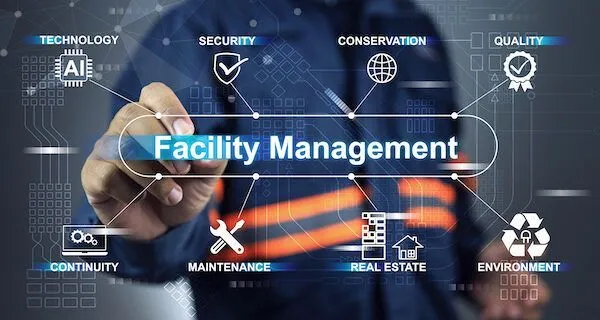
Facilities management is defined as the discipline that integrates people, place, and process to optimize the quality of life within the built environment and enhance the efficiency of core business operations. This framework aims to ensure that every facility operates at the highest levels of safety and effectiveness.
This is the very foundation upon which IMS FM, as a leading facilities management company, builds its approach — delivering sustainable, growth-oriented work environments that ensure every square meter of your facility contributes to profitability, while maintaining the highest standards of safety and operational excellence.
Facility Management Concept & Industry Challenges
Understanding What Is Facility Management Goes Beyond Simple Repairs; It Is A Comprehensive Strategy For Managing The Entire Asset Lifecycle. The Industry Currently Faces Challenges Such As Rising Operational Costs And The Necessity Of Complying With Sustainability Standards, Requiring A Transition From The Traditional Approach (Waiting For Failure) To A Proactive Approach.
Comparison Between Management Methodologies:
Comparison Point | Traditional Management (Reactive) | Modern Management (Proactive) |
Maintenance Style | Repair Only Upon Failure | Predicting Failures Before They Occur |
Costs | High And Unexpected Emergency Expenses | Optimized And Planned Operational Costs |
Asset Lifespan | Rapid Wear Of Assets And Equipment | Extending Asset Life By Up To 30% |
What is the Meaning of Facilities Management?
To truly understand the meaning of facilities management, we must break down the diverse scope of services that keep buildings functional and efficient. These are typically classified into:
Maintenance & Engineering: Ensuring that HVAC, plumbing, and electrical systems operate at peak efficiency — preventing costly downtime and extending the lifespan of critical building infrastructure.
Cleaning & Housekeeping Services: Maintaining health and aesthetic standards across all spaces — a factor that is essential for occupant wellbeing, workplace morale, and the overall reputation of the brand.
Security & Safety: Implementing advanced surveillance systems and safety protocols to protect both human and physical assets — creating a secure environment where people and operations can thrive without disruption.
Energy Management: Monitoring consumption patterns to reduce utility costs and carbon footprint — aligning facility operations with sustainability goals and long-term environmental responsibility.
Types of Facilities Management: Hard, Soft, and Integrated
Not all facilities services are equal. We distinguish between technical and non-technical services to enable smarter, more precise resource allocation:
Hard Facilities Management (Hard FM): Covers the structural and physical components of a building — including elevators, HVAC systems, and electrical systems — encompassing all built-in infrastructure that is permanently and legally fixed to the property.
Soft Facilities Management (Soft FM): Encompasses the services that make the environment comfortable, safe, and welcoming — such as cleaning, security, and landscaping — all of which directly enhance the daily experience and wellbeing of building occupants.
Integrated Facilities Management (IFM): The approach through which all facilities services — both hard and soft — are seamlessly managed through a single trusted partner such as IMS FM. This model delivers maximum transparency, unified accountability, and measurable cost savings through economies of scale.
Facilities Manager Responsibilities and Operational Steps
The facilities manager acts as a bridge connecting strategic planning with day-to-day operations. Their key responsibilities include:
Strategic Planning: Aligning facility capabilities with the company's expansion goals and long-term growth objectives — ensuring the physical environment is always ready to support organizational ambitions.
Operational Oversight: Managing both reactive and preventive maintenance schedules around the clock, seven days a week — guaranteeing that every system and service within the facility operates without interruption.
Financial Control: Forecasting operational expenditure (OpEx) and managing vendor contracts with efficiency and precision — keeping costs under control while maintaining the highest standards of service delivery.
Health, Safety & Environment (HSE): Serving as the primary point of contact for emergency response and leading the implementation of safety drills and compliance protocols — protecting both people and assets at all times.
Examples of Facilities Management: Real-World Scenarios
Hospitals: Management focuses on maintaining sterile environments and ensuring an uninterrupted power supply to life support systems — where any lapse in facility performance can have critical consequences.
Corporate Offices: The focus is on optimizing air quality and lighting conditions to enhance employee efficiency and productivity, creating a workspace that directly supports business performance.
Airports and Shopping Centers: Managing high-density logistics to ensure a seamless and comfortable customer journey — from arrival to departure — across every touchpoint of the facility.
Benefits Of Professional Management And Integration With IMS FM
Investing in a professional facilities management strategy with IMS FM delivers direct and measurable returns.
Enhanced Return on Investment: By extending the productive lifespan of assets and deferring capital expenditure, your organization maximizes the value of every dirham invested in its physical infrastructure.
Smart Technology Integration: We integrate Computer-Aided Facilities Management (CAFM) systems and IoT sensors for real-time performance monitoring — reducing emergency repair costs by up to 40% and shifting operations from reactive to fully proactive management.
Regional Context: In GCC markets — particularly Saudi Arabia and Kuwait — our solutions ensure asset resilience against harsh climatic challenges, protecting infrastructure integrity and increasing the overall market value of your property.
A Future Vision For Your Facilities
Facilities management is not merely an added service — it is a strategic necessity for organizations that aspire to grow and excel. The IMS FM team is ready to help you build an unprecedented strategy tailored specifically to your facility.
Would you like a customized strategy for your facility? Contact IMS - facility management company for a professional consultation with the IMS FM experts.

-webp.webp)