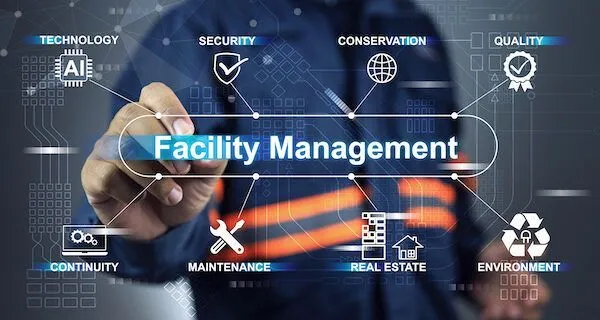
Many managers and decision-makers wonder: What is Total Facilities Management (TFM)? Total Facilities Management (TFM) refers to an integrated approach to managing all facility-related services under a single contract with a specialized service provider.
Instead of dealing with multiple companies to manage maintenance, cleaning, security, and operational services, organizations rely on one company that efficiently coordinates and manages all of these services.
To understand what Total Facilities Management (TFM) is more clearly, it can be described as a centralized management model that integrates people, processes, technologies, and assets into a unified system aimed at improving the operational performance of buildings, reducing operational costs, and enhancing workplace productivity.
Core Services Included in Total Facilities Management
Total Facilities Management typically includes a wide range of services such as:
Technical maintenance of buildings and systems
Cleaning and hygiene services
Security and safety management
Energy and sustainability management
Compliance with regulatory standards
Workplace support services
Many sectors rely on this model, such as commercial real estate, hospitals, educational institutions, industrial facilities, and government entities, with the aim of streamlining operations and ensuring integrated and efficient service delivery across all facilities.
The Human Element: The Key to Success in Total Facilities Management
While technology and infrastructure are essential components of facilities management, the human element remains the most critical factor for the success of a TFM strategy.
A TFM contract relies on a coordinated workforce that manages daily operations, ensures compliance, and delivers high-quality services.
Key Roles in a TFM Environment
Facility managers responsible for overall operational performance
Maintenance engineers managing mechanical and electrical systems
Cleaning staff maintaining workplace hygiene standards
Security specialists ensuring safety and access control
Sustainability specialists optimizing energy usage
Effective communication among these teams ensures smooth operation of all services
Why the Human Element Matters in TFM
The human element drives the success of facilities management strategies by:
Solving problems faster
Improving coordination between services
Delivering better workplace experiences
Increasing operational transparency
Investing in skilled personnel and ongoing training turns TFM into a strategic operational asset rather than just a support function.
The Transformational Impact of TFM on Modern Business
Modern companies operate in increasingly complex environments, with smarter buildings, larger infrastructure, and stricter regulatory requirements. TFM plays a critical role in simplifying this complexity.
Benefits of Implementing TFM
Centralized service management
Enhanced operational visibility
Reduced administrative burdens
Stronger vendor accountability
Instead of managing multiple contractors, companies deal with a single strategic partner responsible for all services.
Area | TFM Impact |
|---|---|
Operations | Improved service coordination |
Finance | Reduced operational costs |
Productivity | Enhanced workplace environment |
Compliance | Adherence to safety and regulations |
Advantages and Disadvantages of the Single-Service Approach
One common debate regarding TFM is whether a single-service provider is always beneficial. While TFM offers many advantages, organizations must also consider its limitations.
Advantages of a Single-Service TFM Model
Simplified management: one contract, one point of contact
Operational efficiency: coordinated service delivery
Cost control: economies of scale across multiple services
Consistent service quality: standardized procedures and regular reporting
Potential Disadvantages of TFM
Reliance on a single provider
Complexity during the transition phase
Possible loss of specialization in some services
Higher initial restructuring costs
These risks can be mitigated by choosing an experienced facilities management partner with strong governance structures.
Best Practices for Implementing TFM
Implementing TFM requires careful planning and organized execution. Organizations should follow best practices to ensure success.
1. Set Clear Objectives
Define goals such as cost reduction, operational efficiency, sustainability, and improved employee experience before transitioning to TFM.
2. Conduct a Facility Audit
A detailed audit helps identify:
Asset condition
Maintenance requirements
Energy consumption patterns
Compliance gaps
3. Select the Right Service Provider
TFM success heavily depends on the expertise of the facilities management company.
Key evaluation criteria include:
Industry experience
Technical capabilities
Workforce expertise
Compliance record
4. Implement Digital Facilities Management Systems
Modern facilities management relies on technologies such as:
CAFM (Computer-Aided Facilities Management) systems
Building Management Systems (BMS)
IoT sensors and predictive maintenance tools
Performance Monitoring Strategies
Effective TFM relies on continuous performance monitoring using Key Performance Indicators (KPIs).
KPI | Goal |
|---|---|
Maintenance Response Time | Measure service efficiency |
Asset Downtime | Monitor operational reliability |
Energy Consumption | Improve environmental performance |
Safety Compliance | Ensure regulatory adherence |
Continuous evaluation improves operational processes and efficiency.
Implementing Sustainable Facilities Management
Sustainability is now a critical component of modern facilities management strategies. TFM enables organizations to implement environmental initiatives across all services, including:
Energy-efficient HVAC systems
Smart lighting systems
Waste reduction programs
Water conservation initiatives
Green building certifications
By integrating sustainability into daily operations, organizations can reduce environmental impact while lowering operational costs.
Leveraging TFM for Competitive Advantage
Companies that effectively implement TFM gain significant competitive advantages. Well-managed facilities improve employee productivity, reduce operational risks, and enhance brand reputation.
Key Competitive Benefits
Improved operational flexibility
Lower operational costs
Higher employee satisfaction
Enhanced sustainability performance
Companies prioritizing facilities management often see higher workplace productivity and stronger operational efficiency.
Single-Service Approach: Pros and Cons
Another important aspect of understanding TFM in business is balancing centralized management with service flexibility.
Pros
Single accountability point
Simplified procurement processes
Coordinated operational planning
Greater data transparency
Cons
Risk of over-reliance on a single provider
Complex contractual negotiations
Potential service gaps during the transition phase
Organizations should implement strong governance frameworks to ensure optimal outcomes from TFM contracts.
Conclusion
Understanding what facilities management is and how TFM works is essential for organizations seeking operational efficiency, cost control, and sustainable building performance.
Partnering with a specialized facilities management company allows businesses to simplify operations, improve asset performance, and create safer, more productive work environments.
If your organization is looking to implement Total Facilities Management (TFM) solutions, IMS Smart Management Solutions (IMS FM) can design a customized strategy tailored to your facilities and buildings.

-webp.webp)